Tracking for Trailers, Attachments & Non-Powered Assets
Compare periodic-location hardware for trailers, containers, attachments and other assets where a permanent power connection is unavailable or impractical.
Assets outside the powered fleet
Unpowered assets can remain in yards, customer sites or remote work areas for long periods. The tracking plan needs to balance reporting frequency, coverage and service access.
Installation without a permanent power tap
Battery, magnetic and solar-assisted units can reduce wiring work, but mounting, autonomy, reporting frequency, exposure and the maintenance schedule still need to be checked.
What customers track
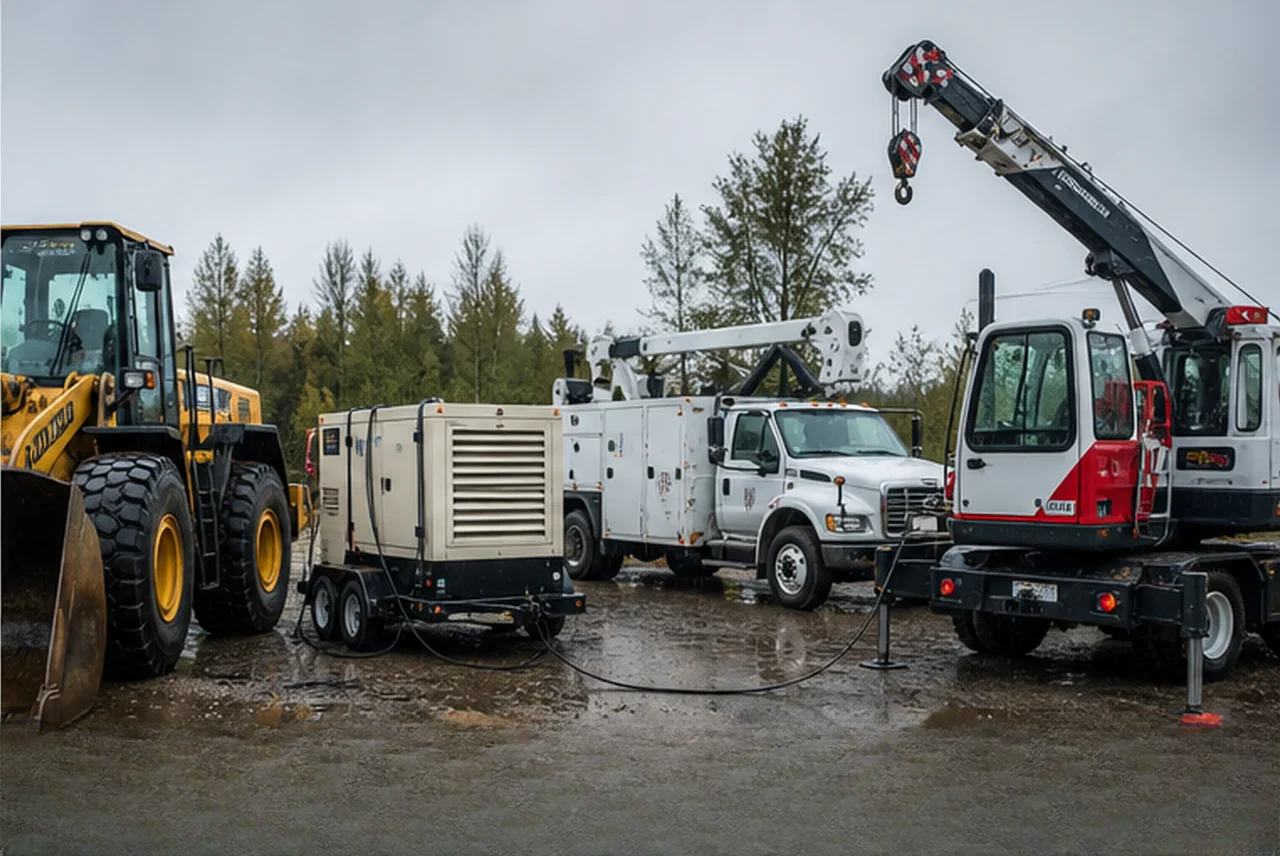
Typical projects include plant trailers, digging attachments, drilling rigs, site containers and tool cages. Suitability depends on the asset, movement pattern and required update interval.
Start with the operation, then verify the hardware path.
We support fleet and equipment operators as well as telematics providers, integrators, installers and distributors. The work is to define requirements, compare available evidence, coordinate samples and check the data path before a wider decision.
Define the working requirement
Document the vehicles, equipment or assets, installation conditions, required signals and receiving platform before comparing models.
Compare evidence and samples
Review supplier documents, available interfaces and sample output. Anything not supplied remains an open item rather than an assumed capability.
Coordinate the data path
Confirm the protocol, fields, accessories, server settings and installation details required by the selected project.
What to confirm before choosing non-powered asset hardware.
The right non-powered asset device depends on how the asset is powered, where it operates, what data the platform needs and which markets the unit must comply with.
Power source
Confirm whether the asset offers continuous, intermittent or no fixed power. Match a wired, battery or solar-assisted option to that supply and validate its reporting profile and service interval.
Network and coverage
LTE-M or NB-IoT may fit a low-power deployment only when the exact module, operator coverage, bands and reporting profile are confirmed for the region. Do not assume automatic 4G fallback; validate the selected device and deployment power plan.
Interface and data
Most asset units need no machine interface beyond GNSS and a movement sensor. Add a fuel or runtime input only when the use case justifies the extra wiring.
Enclosure and installation
IP67 addresses dust and water ingress under its stated test conditions; check vibration, mounting and exposure separately. Magnetic or strap mounts suit temporary placement; bolt mounts suit long-term installs.
Hardware that fits non-powered asset.
For non-powered assets, start with the GT76 when no fixed power is available and periodic location reporting is the requirement. An A700 is an alternative only when the asset can provide a stable 9–90V supply and a hardwired outdoor installation is acceptable. Confirm the exact variant, mounting, reporting behaviour, network and platform requirements before selection. See the Shenzhen supplier comparison for how models are shortlisted.
Certification is confirmed per model and market.
Radio, safety and telecom certifications (for example CE, FCC, RoHS and relevant regional marks) are issued by the manufacturer for the specific model and variant. Exact coverage is checked before order; documents are provided on request for the models concerned.
Tell us the operation and the open questions.
We will reply with the checks still needed and an initial hardware direction.
Discuss your requirement