Do GPS Trackers Work in Shipping Containers?
Short answer: sometimes, and where you mount the unit decides which. A shipping container is a sealed steel box, and steel is very good at stopping exactly the signals a tracker depends on.
Match container tracking hardwareStart with the decision
Key decisions for container tracking hardware
Start with the signal path
Steel walls and roofs interfere with satellite positioning and reduce cellular margin.
Key point: Mounting position is the first specification decision, not an installation detail.
Design for silence during transit
Stacking and sea transit can stop reporting for days or weeks without indicating a fault.
Key point: The device must be judged by its logging and reconnection behaviour.
Protect the energy budget
Repeated transmission attempts without coverage can flatten a battery before the voyage ends.
Key point: Reporting profile and no-network behaviour matter more than a headline battery figure.
Confirm the useful inputs
Door state, temperature and light detection answer different cargo questions.
Key point: Confirm the relevant input per model before adding a second device or dashboard.
Test on the real box
Use the same container type, mounting position and route as the wider order.
Key point: A sample that reports beside an open yard is not proof it will report inside a loaded stack.
Most container tracking disappointment comes from a reasonable assumption that turns out to be wrong: that a device which works on a trailer will work the same way once it is inside a container.
It usually will not, and the reason is physics rather than product quality. This page explains what actually happens, and how projects are specified around it.
What happens to the signal inside a container
A tracker needs two radio paths, and a steel box interferes with both:
- Satellite positioning needs sky. The signal from a positioning satellite is weak by the time it reaches the ground and does not pass usefully through a steel roof and walls. A unit sealed inside a loaded container will often fail to get a fix at all.
- Cellular needs a path out. Cellular signals are stronger and lower in frequency, so some energy leaks through door seals, vents and gaps. This is why a unit inside a container can sometimes still report — but with far less margin than in open air, and not reliably.
Container tracking is usually specified as last known and newly acquired positions rather than continuous live position. When GNSS fixes are available but cellular service is not, a capable device may store those records and upload them later; the platform cannot fill locations the device never observed.
If a supplier tells you a device gives continuous live position from inside a sealed, stacked, loaded container, ask them how. The honest specification accepts gaps and is designed to survive them.
Where the unit goes changes everything
| Mounting position | What you get | Trade-off |
|---|---|---|
| Externally on the roof or wall | The best signal by a wide margin — effectively open-air performance. | Exposed to weather, handling damage and removal. Needs a rugged housing and secure attachment. |
| Inside, on the door or door frame | Usable cellular reporting in many cases; positioning is intermittent. | Depends heavily on the container, the load and the seal. Test before committing a fleet. |
| Inside, on the roof or wall | Well protected and hard to find. | Weakest signal path. Often reports only when doors are open or the container is empty. |
| On the chassis or trailer instead | Reliable, because it is outside the box. | Tracks the vehicle, not the container. Once the box is dropped, you lose it. |
For high-value cargo, some operators fit both: an external or door-mounted unit for the container, and a separate unit on the trailer. That is a cost decision, not a technical one.
Transit behaviour
Sea transit and stacking: expect gaps, plan for them
Two situations reliably produce silence, and neither indicates a fault:
- Stacked in a yard or below deck. Surrounded by steel on all sides, with no cellular network within reach at sea, a unit will simply stop reporting — for days or weeks.
- Deep inside a terminal. Even ashore, the middle of a stack behaves much like being at sea.
The features that matter here are GNSS acquisition and buffering/reconnection behaviour: does the device continue obtaining fixes or events in the actual mounting and stacking conditions, and does it buffer those acquired records during a cellular outage and upload them on reconnection? A capable device may provide delayed records for the points it successfully captured; it cannot recreate positions GNSS never fixed.
This is also why battery strategy matters more than on a road asset. A unit that keeps trying to transmit with no network can flatten itself before the voyage ends.
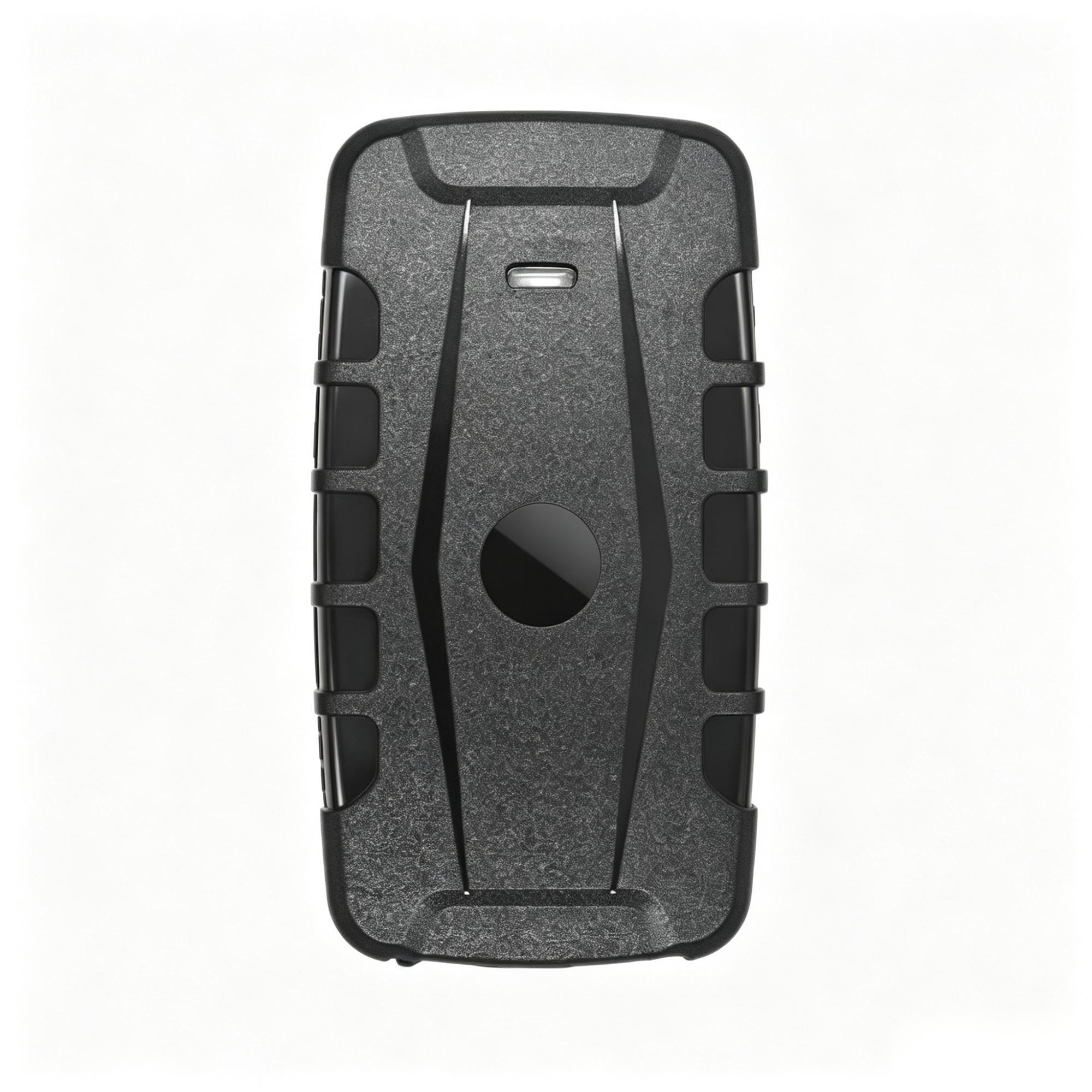
GT76
A long-standby battery unit for containers with no permanent supply.
Explore GT76What to confirm before ordering container trackers
| Check | What to establish | If you get it wrong |
|---|---|---|
| Mounting plan | Exactly where the unit will sit, on which container type, and who fits it. | Every other specification decision rests on this. Get it wrong and nothing else helps. |
| Store-and-forward | Whether the device logs while offline and uploads the backlog on reconnection. | Records successfully captured during cellular-only outages may be lost; positions GNSS never fixed cannot be recovered. |
| Battery strategy | Standby draw, behaviour when no network is available, and expected life at your reporting profile. | Units flat on arrival, or a fleet needing service far sooner than budgeted. |
| Roaming | Which networks are usable in each origin, transit and destination market. | A container that reports at home and never again. |
| Enclosure & attachment | Ingress rating, impact tolerance, and whether the mount survives handling. | Units knocked off during lifting or stacking. |
| Sensors | Whether door state, temperature or light detection are needed. | A second device on the same box, in a second dashboard. |
For containers, the comparison usually starts from a long-standby battery unit such as the GT76, since there is no permanent supply. Reporting profile and mounting position matter more than any feature on the datasheet.
Containers and trailers are related but not the same
Both are unpowered assets, so the battery-versus-reporting trade-off applies to both. Containers add the sealed steel enclosure, sea transit and stacking; trailers add road exposure, coupling and drop-and-hook operations. If your assets are trailers rather than boxes, start with trailer GPS tracking; for the wider category, see non-powered asset tracking.
Tracker selection
Decide the mounting position first. The tracker selection check covers power model, reporting profile and enclosure.
Data usage
The data usage calculator helps size the reporting interval.
Field sheet
The blank field confirmation sheet records what each asset type needs. All are free and usable with any supplier.
Reefer containers are a different problem. Once a temperature record has to hold up commercially, see cold chain tracking devices.
Frequently asked questions
Choosing the hardware
Do GPS trackers work inside shipping containers?
Partly, and it depends on mounting. Satellite positioning generally does not work through a steel roof and walls, so a sealed unit often cannot get a fix. Cellular can sometimes leak out through door seals and vents, so reporting may still happen, but with much less margin. Externally mounted units work far more reliably.
Where should a container tracker be mounted?
Externally gives the best signal but exposes the unit to weather, handling and removal. Inside on the door or door frame is the usual compromise. Inside on the roof or wall is the best protected and the worst performing.
Will a tracker report while the container is at sea?
Generally no. Away from terrestrial coverage at sea, cellular service may be unavailable and the container is usually surrounded by steel. Any backlog can contain only positions or events the device successfully captured; it cannot contain positions GNSS never fixed. Confirm logging and later upload separately.
What happens when containers are stacked?
A container in the middle of a stack is shielded on every side and will usually stop reporting until it is moved. This is expected behaviour, not a fault.
How long does a container tracker battery last?
It depends on the reporting profile and on how the device behaves when no network is available. A unit that keeps retrying transmission with no coverage can flatten itself far sooner than the datasheet figure suggests.
Can we track temperature or door opening as well?
On models that support the relevant inputs, yes. Door state is often more useful than temperature for dry cargo, because it indicates unauthorised access.
Ordering and support
Is it better to track the container or the trailer?
They answer different questions. A trailer unit is more reliable but stops being useful once the box is dropped. High-value operations sometimes fit both.
What is the minimum order quantity?
Custom orders start from 100 units. Samples and small validation batches are handled separately, so testing on your containers does not require a production commitment.
What warranty applies?
A 12-month limited warranty from the shipment date shown on the commercial invoice — a date both sides can verify from the same document.
Can the data go into our existing platform?
Where the model supports it, yes. We confirm that capability per model before you commit, so the platform choice stays open after the hardware is bought.